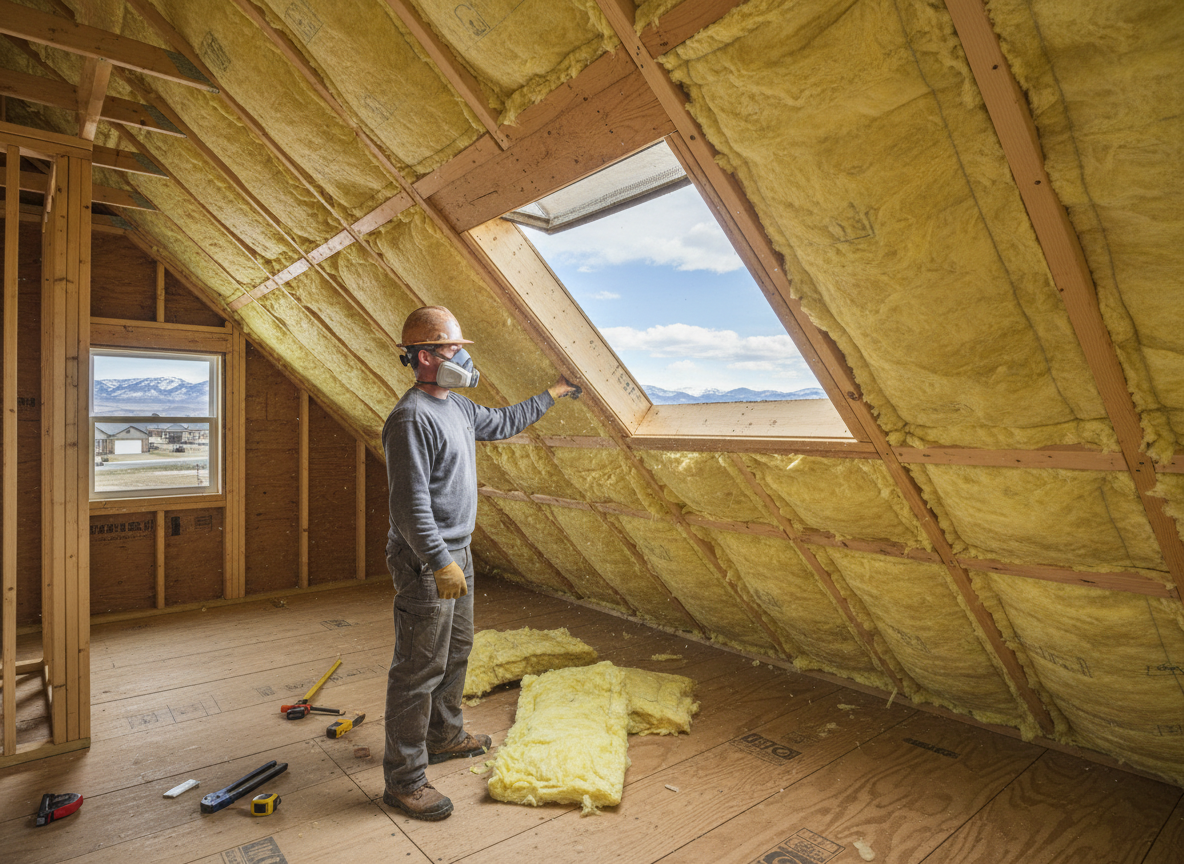
Riverton homes in neighborhoods like Western Springs and Harvest Park often feature older roof assemblies with limited ventilation that struggle under the county's semi-arid climate. Hot summers drive heat gain through the roof deck while cold winter nights pull heat out fast once temperatures drop below freezing. Proper roof insulation requires selecting materials such as dense-pack cellulose or closed-cell spray foam that handle both extremes without trapping moisture in the dry air that still sees sudden temperature swings. We check for existing ridge and soffit vents before adding insulation because many pre-1990s homes near Riverton City Park lack adequate airflow and create ice dams when snow falls.
Edge cases appear frequently in Riverton Meadows where vaulted ceilings meet standard attics. These transitions need careful baffling to keep insulation from blocking airflow paths. Utah energy code requires minimum R-49 in ceilings for this zone, yet many homes fall short because previous contractors skipped the hard-to-reach eaves. We also watch for knob-and-tube wiring remnants common in older Salt Lake County properties; covering those without proper separation creates fire risk. In nearby Draper and South Jordan, newer builds sometimes use spray foam directly on the roof deck, which changes how we approach any future roof replacement.
Moisture management matters even in Utah's dry climate because winter humidity from indoor living can condense on cold roof sheathing. We install vapor retarders only where needed and always verify existing bathroom and kitchen exhausts vent fully outside. Homeowners in Herriman often overlook how wind-driven snow can enter poorly sealed attic spaces, so we seal penetrations around chimneys and plumbing vents during every roof insulation project.
Technician insight
In Riverton the thing that catches most people out with roof insulation is how cold winter winds funnel through the Salt Lake Valley and expose every unsealed gap around plumbing vents in pre-1990 homes in Harvest Park and Western Springs. Homeowners assume adding more material fixes everything but skip the baffles and the insulation ends up blocking the little airflow that was there.
Riverton Meadows Roof Insulation Upgrade
A homeowner in Riverton Meadows called after noticing higher heating bills during a cold snap. We found six inches of settled fiberglass with blocked soffit vents on a 1970s ranch. We added cellulose over the existing material after installing proper baffles and sealed the plumbing stack penetrations. The owner reported steadier indoor temperatures the following winter.
How it works
- 1
On-Site Assessment
We inspect the roof deck, existing insulation depth, ventilation, and any wiring or duct issues from the attic side in Riverton homes.
- 2
Material Selection
We choose insulation type based on roof pitch, access points, and whether the home sits in areas like Harvest Park with older construction.
- 3
Installation
Technicians install baffles, seal gaps, and add insulation while protecting existing vents and avoiding over-compression in tight eaves.
- 4
Final Verification
We confirm R-value targets, airflow paths remain clear, and the job meets Salt Lake County expectations before cleanup.
Pricing
Upfront quotes after inspection; final cost depends on access difficulty and existing insulation condition.