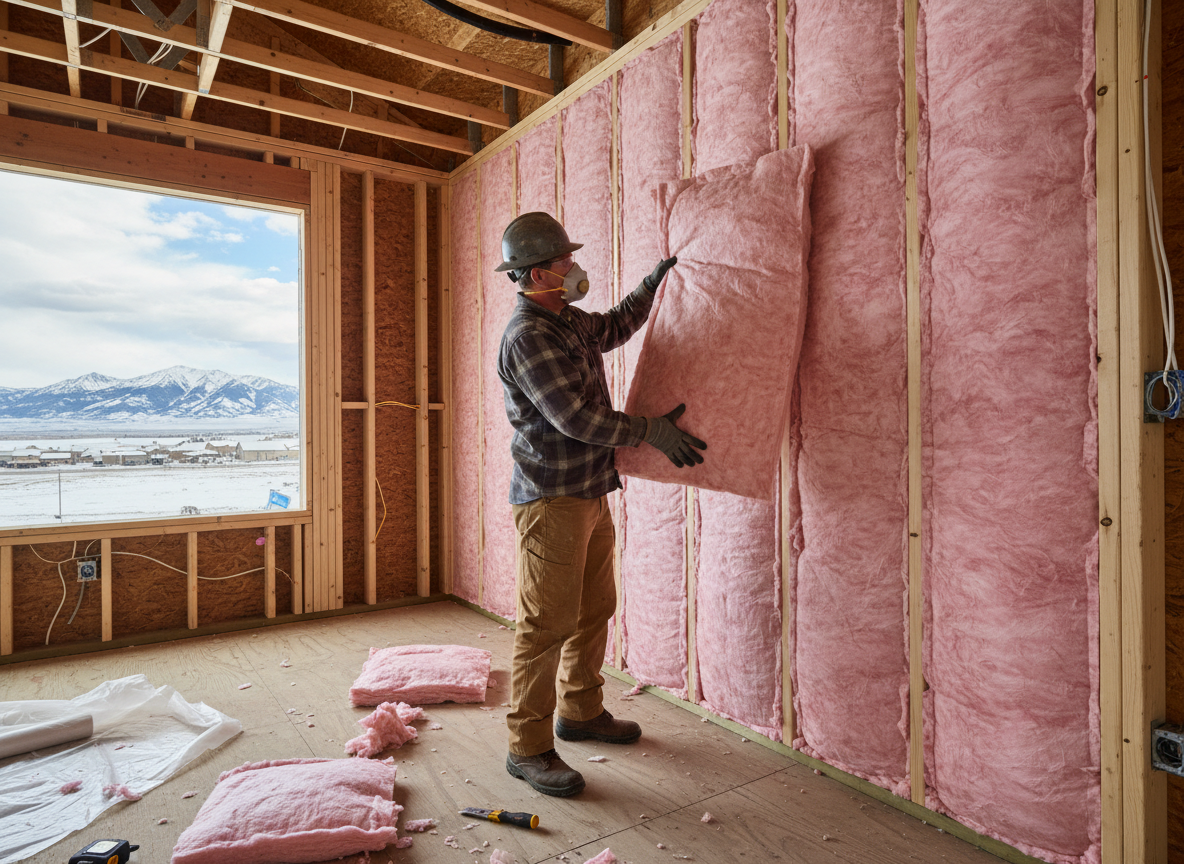
Fiberglass batts and blown-in fiberglass are common choices for attics in Riverton because they handle the wide temperature swings between semi-arid summers and freezing winters without settling quickly. In homes built before the 1990s in Western Springs and Harvest Park, existing insulation often lacks proper vapor retarders, allowing moisture from daily living to reach the cold roof deck during long winter nights. Proper installation requires maintaining ventilation channels at the eaves so air can still move from the soffits to the ridge, preventing ice dams that form when warm air leaks upward. Crews also seal penetrations around recessed lights and bath fans before adding material so the new layer does not trap heat or create condensation points.
Access in Riverton Meadows ranch-style homes is usually through a single pull-down stair, which limits how much material can be moved in at once and requires careful staging to avoid crushing existing batts. When ducts run through the attic, fiberglass must be kept at least three inches away from metal surfaces unless they are first wrapped, because direct contact can cause condensation on cold days. Blown fiberglass works better than batts in irregular rooflines common on homes near Riverton City Park, but it still needs baffles installed at every rafter bay to keep insulation from blocking soffit vents. Homeowners in nearby Draper and South Jordan often call after noticing higher heating bills once temperatures drop below freezing for more than a week.
Code requirements in Salt Lake County now call for R-49 in most attic spaces, which means adding several inches on top of older layers rather than removing them. Fiberglass does not absorb water like cellulose, an advantage in areas where spring snowmelt can leak through older roof flashings around chimneys. Installers still wear full PPE because loose fibers irritate skin and lungs even in well-ventilated attics. Final inspections focus on verifying that insulation does not touch chimney pipes or cover attic fans, two details that change how the job is finished in older Harvest Park properties.
Technician insight
In Riverton the thing that catches most people out with fiberglass insulation is older homes in Western Springs where the original knob-and-tube wiring still runs through the attic; you have to create a three-inch clearance around every wire before blowing material or the insulation packs against the cloth-covered lines and creates a hidden fire risk once winter heating loads increase.
Riverton Meadows Ranch Attic Upgrade
Homeowner noticed higher heating costs after several cold snaps. We found six inches of settled fiberglass over an unbaffled soffit area with ducts resting directly on the old layer. Added baffles, sealed around all penetrations, then blew additional fiberglass to reach uniform R-49 depth while keeping material clear of the ducts and wiring.
How it works
- 1
Attic Assessment
Technician enters through existing access, measures depth of current insulation, checks for moisture stains, and confirms ventilation paths remain clear.
- 2
Preparation
Seal gaps around pipes, lights, and fans with appropriate caulk or foam, then install baffles at eaves to maintain airflow.
- 3
Material Placement
Blow or lay fiberglass to reach R-49 depth while keeping material away from heat sources and maintaining even coverage across the floor.
- 4
Final Check
Verify no insulation blocks vents or contacts chimneys, then document depth and R-value for the homeowner.
Pricing
Cost depends on attic size, current insulation depth, and ease of access through existing openings.