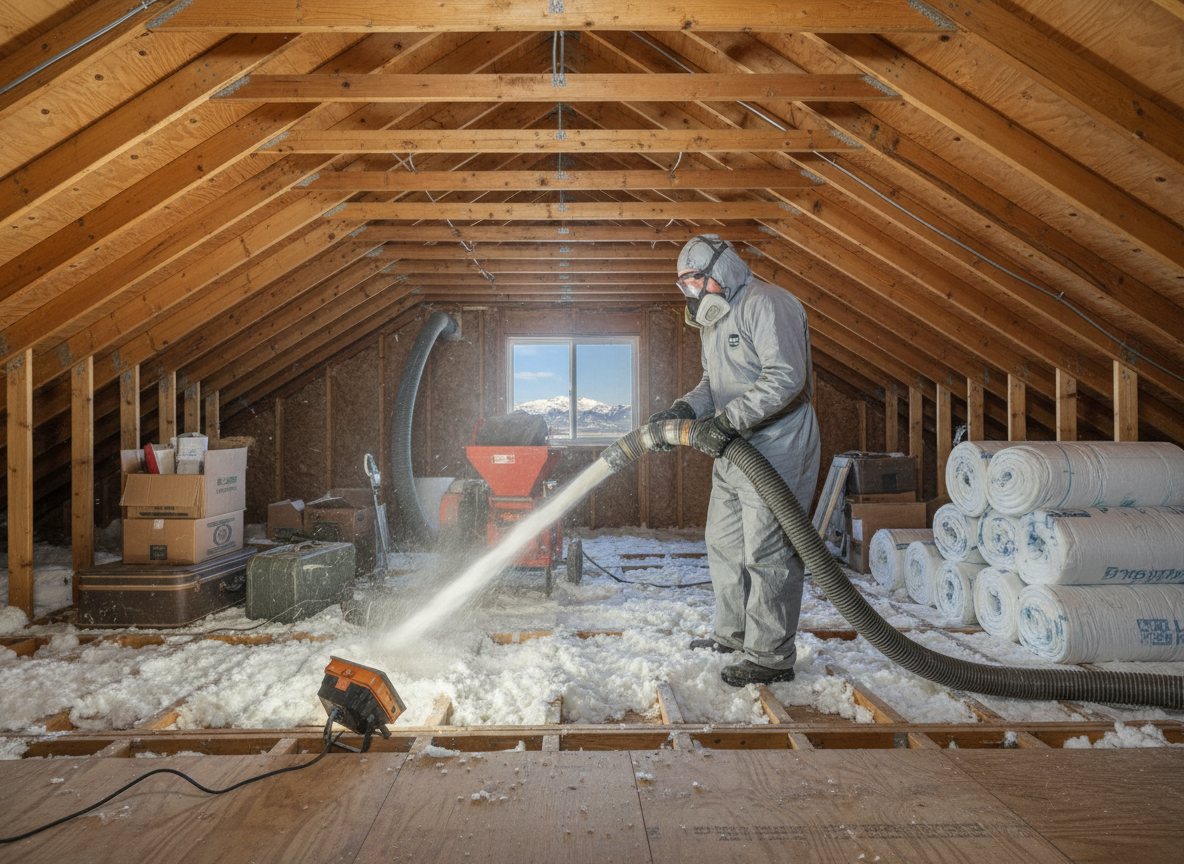
Homes in Riverton Meadows and Western Springs often date from the 1970s through 1990s, with attics that lose heat quickly once winter temperatures drop below freezing and gain heat fast during the semi-arid summer peaks. Proper material selection matters here because cellulose settles less than fiberglass in the dry air common to Salt Lake County, while spray foam creates an air seal that counters wind-driven infiltration near the Jordan River corridor. Older roof decks around the Old Dome Meeting Hall frequently show signs of past moisture from snow melt, so any insulation upgrade must include checks for ventilation paths to avoid trapping vapor.
Installation crews working out of the 50 W Broadway base see the same pattern in Harvest Park and nearby Draper properties: recessed lights and bathroom fans left unsealed allow conditioned air to escape year-round. In these cases, baffles and blocking are added first so insulation does not block soffit vents, a step that becomes critical when summer highs push attic temperatures well above 120 degrees. Homeowners in South Jordan and Herriman sometimes request additional depth over existing material, yet the real gain comes from addressing the gaps around plumbing stacks and electrical penetrations that are common in the county's ranch-style stock.
Code requirements in Salt Lake County call for minimum R-38 in attics for this climate zone, but many pre-1980 homes fall short because original batts were compressed or displaced during prior work. Crews verify existing depth and type before adding material so the final assembly meets current energy standards without creating new condensation points at the roof deck. This approach keeps the job practical for the varied roof pitches found across Riverton.
Technician insight
In Riverton, the thing that catches most people out with attic insulation is the combination of older roof decks in Harvest Park homes and the dry winter winds that push air through every unsealed penetration; adding material without first blocking those paths just moves the leak higher.
Attic Upgrade Near Riverton City Park
A 1980s home showed high heating bills and ice dams along the eaves each winter. Inspection revealed compressed fiberglass and open gaps around plumbing vents. Crews added cellulose after installing baffles and sealing penetrations, resulting in more consistent attic temperatures and fewer drafts reported by the owners.
How it works
- 1
Site Assessment
Technician measures current insulation depth, checks for moisture stains, and identifies bypasses around vents and lights in the specific attic layout.
- 2
Material Selection
Choose between cellulose, fiberglass, or closed-cell foam based on access, existing conditions, and the home's exposure to winter winds common in western Riverton.
- 3
Preparation
Install baffles, seal penetrations, and protect recessed fixtures before any new material is placed to maintain ventilation and safety.
- 4
Installation and Verification
Blow or lay insulation to target depth, then confirm even coverage and proper R-value across the entire attic plane.
Pricing
Upfront quotes provided after on-site assessment; cost varies with attic access, existing material condition, and chosen insulation type.