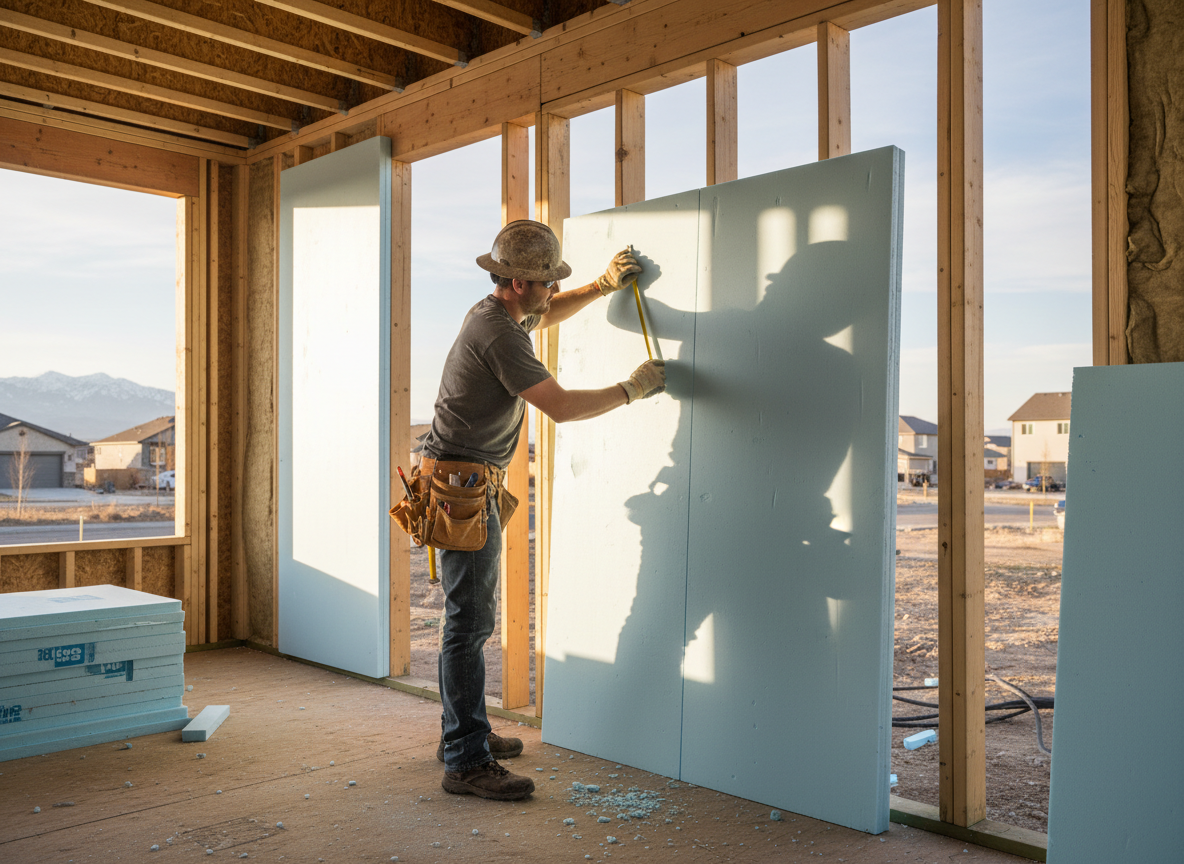
Foam board insulation works well in Riverton attics because the material resists moisture in the semi-arid climate while providing a solid thermal break. Homes in neighborhoods such as Western Springs and around the Old Dome Meeting Hall often have older rafter spacing that requires precise cutting to avoid gaps. In summer the boards help block heat gain from the roof, and in winter they reduce heat loss when temperatures drop sharply at night. Proper taping of seams prevents air movement that can carry fine dust common in the Salt Lake Valley.
Installers must account for the dry soil and low humidity that can cause wood framing to shift slightly over seasons. In Harvest Park, many homes built before widespread code updates have limited attic access points, so boards are often cut on site and slid into place rather than using full sheets. Edge cases include cathedral ceilings near Riverton City Park where foam board must be paired with baffles to maintain airflow. Skipping a vapor retarder on the warm side can lead to condensation on the underside during cold snaps.
Local building practices in Salt Lake County favor R-30 or higher in attics, and foam board meets that when layered correctly without compressing. Crews check for recessed lights and chimneys before starting, because the material needs a clearance gap to meet fire codes. Nearby cities like Draper and Herriman share the same wind patterns that push attic dust into any unsealed joints, so perimeter sealing is always included.
Technician insight
In Riverton, the thing that catches most people out with foam board insulation is the way older attics in Harvest Park trap heat during the day then radiate it back at night, so if you skip full perimeter sealing the boards shift and leave gaps that the dry valley winds push dust through.
Western Springs Attic Upgrade
Homeowner noticed high summer cooling bills in a Western Springs house. Inspection showed gaps in existing insulation around rafters. Crew installed custom-cut foam board with taped seams and added baffles at the eaves. Result was tighter temperature control through the next winter without added moisture issues.
How it works
- 1
Attic Assessment
Measure rafter bays and check ventilation in Riverton homes to determine board thickness needed for local temperature swings.
- 2
Material Prep
Cut rigid foam boards to fit irregular spaces common in older stock around the Old Dome Meeting Hall and Western Springs.
- 3
Installation
Place boards between rafters, tape seams, and seal edges to block air movement driven by semi-arid winds.
- 4
Final Inspection
Verify clearance at lights and vents, then confirm no gaps remain that could allow dust infiltration from the valley floor.
Pricing
Cost depends on attic size, access difficulty, and layering needs in Salt Lake County homes; upfront quotes provided after inspection.