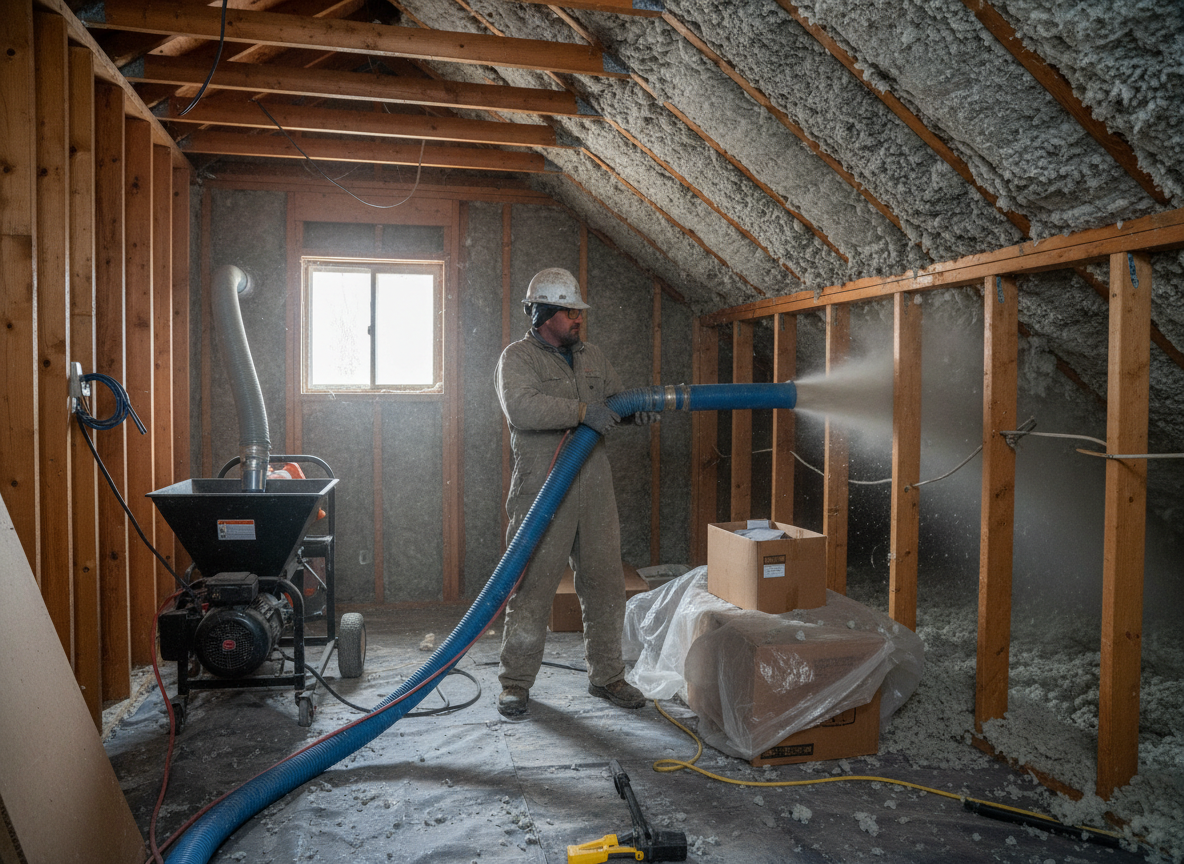
Homes in Riverton Meadows and Western Springs often date from the 1980s through early 2000s with R-19 or less in attic spaces. Salt Lake County's semi-arid climate brings hot summers that drive cooling loads and cold winters that push heating demands, so adding cellulose or fiberglass batts to reach R-49 or higher cuts energy loss at the ceiling plane. Proper baffles and recessed light covers prevent moisture buildup that can occur when warm air from living spaces meets the cold underside of the roof deck during January freezes.
Edge cases appear in Harvest Park where vaulted ceilings and limited access hatches make dense-pack cellulose the practical choice over loose-fill. Older single-story ranches near Riverton City Park frequently have knob-and-tube wiring that must be identified before any insulation is installed. South Jordan and Herriman commuters with similar tract homes report the same issue: missing ridge venting turns an insulation job into a ventilation correction first, otherwise trapped moisture leads to sheathing rot within two seasons.
Utah energy code requires minimum R-38 in attics for climate zone 5B, yet many Riverton properties fall short because prior owners only added a thin layer over existing material. We always verify existing depth and compression before adding new product, and we seal bypasses around plumbing stacks and electrical penetrations that are common in homes built before 1995. This step stops the stack effect that pulls heated air through the attic in winter and pulls hot attic air down into living spaces during July afternoons.
Technician insight
In Riverton the thing that catches most people out with home insulation is older homes in Harvest Park that still have the original thin fiberglass over knob-and-tube wiring. Once winter temperatures drop, any added material without proper sealing just traps the heat loss instead of stopping it, and you end up with ice dams along the eaves near Riverton City Park.
Harvest Park Attic Upgrade
A 1987 ranch in Harvest Park showed only four inches of settled insulation and heavy air leakage around plumbing vents. We sealed the bypasses first, then added cellulose to reach R-49 while protecting the existing wiring. The homeowner later noted lower winter heating runs and no more frost on the attic hatch.
How it works
- 1
Initial Attic Assessment
We inspect current insulation depth, ventilation, and bypasses from the access point in homes throughout Riverton Meadows and nearby streets.
- 2
Air Sealing
All penetrations and top plates are sealed before any new material is added to stop air movement that defeats insulation performance in cold winters.
- 3
Material Installation
Cellulose or fiberglass is installed to target R-value while maintaining baffles and protecting recessed fixtures in Salt Lake County attics.
- 4
Final Ventilation Check
Ridge and soffit vents are confirmed clear so moisture can escape during temperature swings between hot days and freezing nights.
Pricing
Cost depends on attic access, existing insulation condition, and square footage; we provide upfront quotes after the assessment.