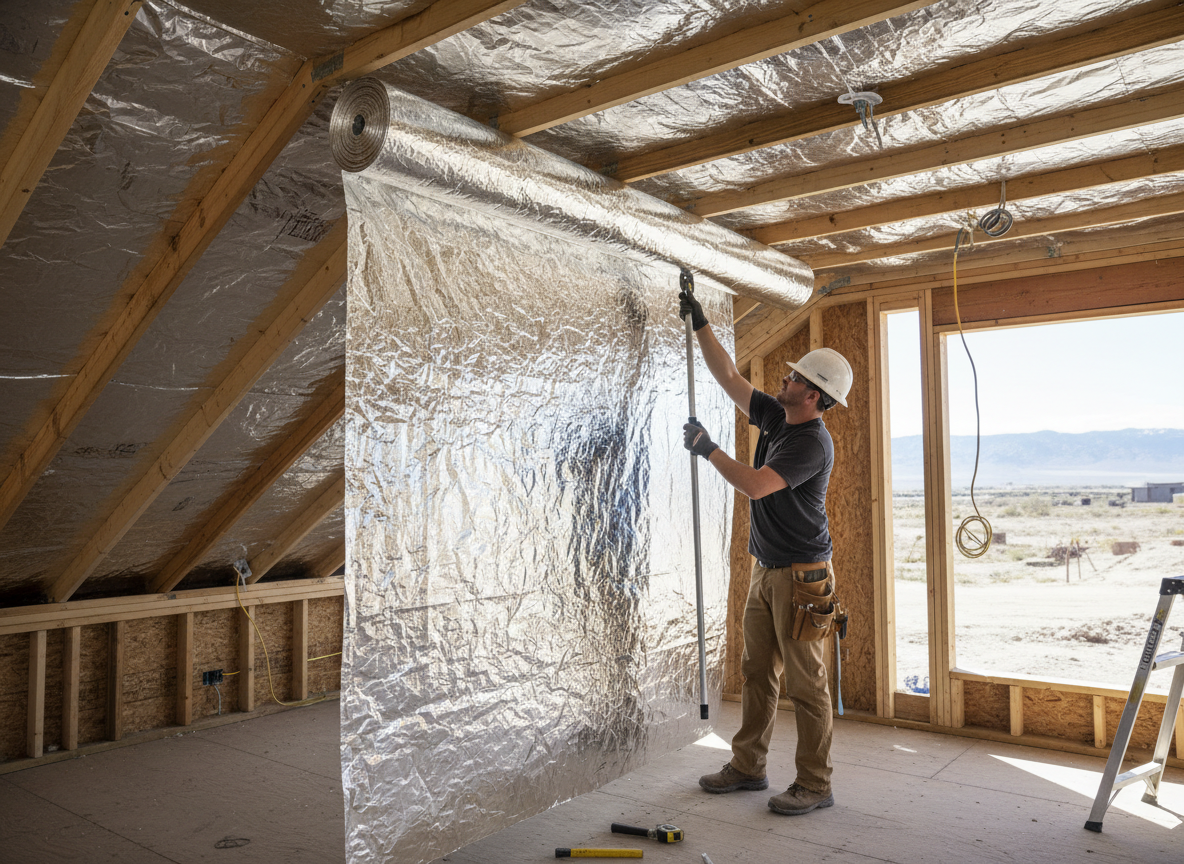
Foil insulation works by reflecting radiant heat rather than absorbing it, which matters in Riverton's semi-arid climate where summer sun drives attic temperatures well above outdoor readings. Homes in neighborhoods like Western Springs and Harvest Park often have vented attics with asphalt shingles that soak up daytime heat; a properly installed foil layer on the underside of rafters or over existing insulation keeps that heat from radiating downward into living spaces. Installers must maintain a consistent air gap and seal seams with foil tape to prevent thermal bridging at truss chords or penetrations.
Winter conditions in Salt Lake County bring the opposite challenge. Cold nights cause rapid heat loss through the roof plane, and foil barriers help retain warmth when paired with adequate fibrous insulation below. Older housing stock in Riverton Meadows frequently shows compressed batts or missing insulation around recessed lights and plumbing stacks, so foil work often includes identifying and correcting these bypasses before the radiant layer goes in. Failure to address moisture from bathroom exhausts or ice dam leaks can lead to condensation on the foil underside during temperature swings.
Terrain and access realities affect every job. Many Riverton properties sit on sloped lots with limited crawl space above the top plates, requiring technicians to work from the attic side only and use radiant barrier staples or furring strips rather than loose-lay methods. Nearby cities such as South Jordan and Herriman share similar wind-driven dust loads that settle on attic surfaces, so crews routinely clean before installation to ensure adhesion and reflectivity remain high over time.
Technician insight
In Riverton, the thing that catches most people out with foil insulation is the wind-blown dust that settles on every surface in attics near Riverton City Park and Old Dome Meeting Hall; if you don't clean it off first the foil won't stay put and reflectivity drops fast once summer heat returns.
Harvest Park Attic Heat Gain
Homeowner in Harvest Park reported second-floor rooms staying hot long after sunset. Inspection showed bare rafters allowing direct radiant transfer. Installed foil barrier across the full attic plane with sealed overlaps. Temperatures equalized and cooling cycles shortened noticeably.
How it works
- 1
Attic Assessment
Inspect existing insulation, ventilation paths, and moisture sources in Riverton attics before any foil work begins.
- 2
Surface Preparation
Clear dust and debris, seal gaps around penetrations, and confirm adequate air gap space for the foil layer.
- 3
Foil Installation
Roll out and staple radiant barrier material to rafters or joists, overlapping seams and taping all edges for continuity.
- 4
Final Inspection
Verify coverage, airflow, and that no foil contacts electrical components or recessed fixtures.
Pricing
Pricing varies by attic size, access difficulty, and whether existing insulation needs adjustment; upfront quotes provided after inspection.