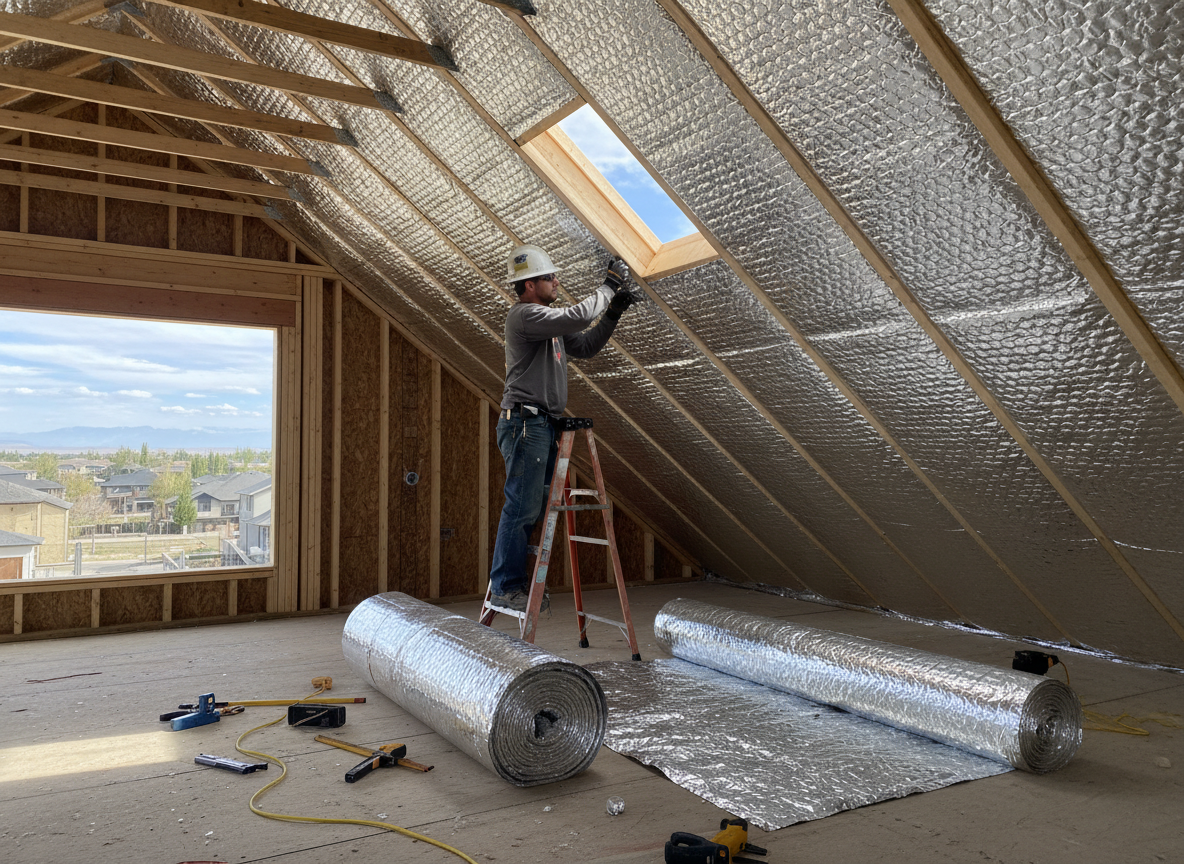
Double bubble insulation consists of two layers of polyethylene bubbles sandwiched between reflective foil faces that redirect radiant heat rather than absorbing it. In Riverton homes this matters because semi-arid summers push roof temperatures high while cold winters pull heat outward through the same surfaces. Installers cut and staple the material directly to rafters or trusses, maintaining a consistent air gap so the foil can perform. Proper overlap at seams and sealing around penetrations prevents the foil from acting as a vapor trap in the dry climate where moisture issues still appear around bathroom vents.
Homes in Riverton Meadows and Western Springs often feature truss roofs with limited headroom and existing batts that must stay in place. Double bubble goes over the top without compressing the original material, but installers still check for recessed lights and wiring that require clearance. South Jordan and Herriman properties with similar construction show the same pattern: older attics have uneven rafter spacing that forces custom cuts around every obstruction. Skipping these steps leaves radiant heat paths that defeat the purpose during peak summer afternoons.
Salt Lake County building practices expect attic ventilation to remain unobstructed, so double bubble must stop short of soffit intakes and ridge vents. In Harvest Park homes near Riverton City Park, crews frequently find blocked vents from prior work that would trap heat against the new foil. The material itself adds no structural load, yet installers still verify that existing insulation depth meets code minimums before covering it. Homeowners in Draper notice the difference most after the first winter when indoor temperatures hold steadier without extra furnace runtime.
Technician insight
In Riverton, the thing that catches most people out with double bubble insulation is how older truss roofs in Western Springs leave narrow cavities where the foil gets pinched against sheathing, killing the air gap that actually does the work during cold winter nights.
Harvest Park Attic Retrofit
Homeowners noticed uneven heating and high summer attic temperatures. Inspection revealed gaps around existing batts and blocked ridge vents. Double bubble was installed over the insulation with sealed seams and restored ventilation paths. Temperatures stabilized without added mechanical changes.
How it works
- 1
Attic Assessment
Measure square footage, check existing insulation depth, and identify vents, lights, and wiring in homes across Riverton Meadows and Western Springs.
- 2
Surface Preparation
Clear debris, ensure rafter access, and confirm ventilation paths remain open before any material enters the space.
- 3
Material Installation
Cut double bubble to fit, staple to rafters with required air gap, and overlap seams by six inches throughout the attic.
- 4
Edge Sealing and Cleanup
Tape all joints and penetrations, restore access points, and remove scraps so the attic is left ready for normal use.
Pricing
Cost depends on attic size, access difficulty, and whether existing insulation needs protection in Salt Lake County homes.