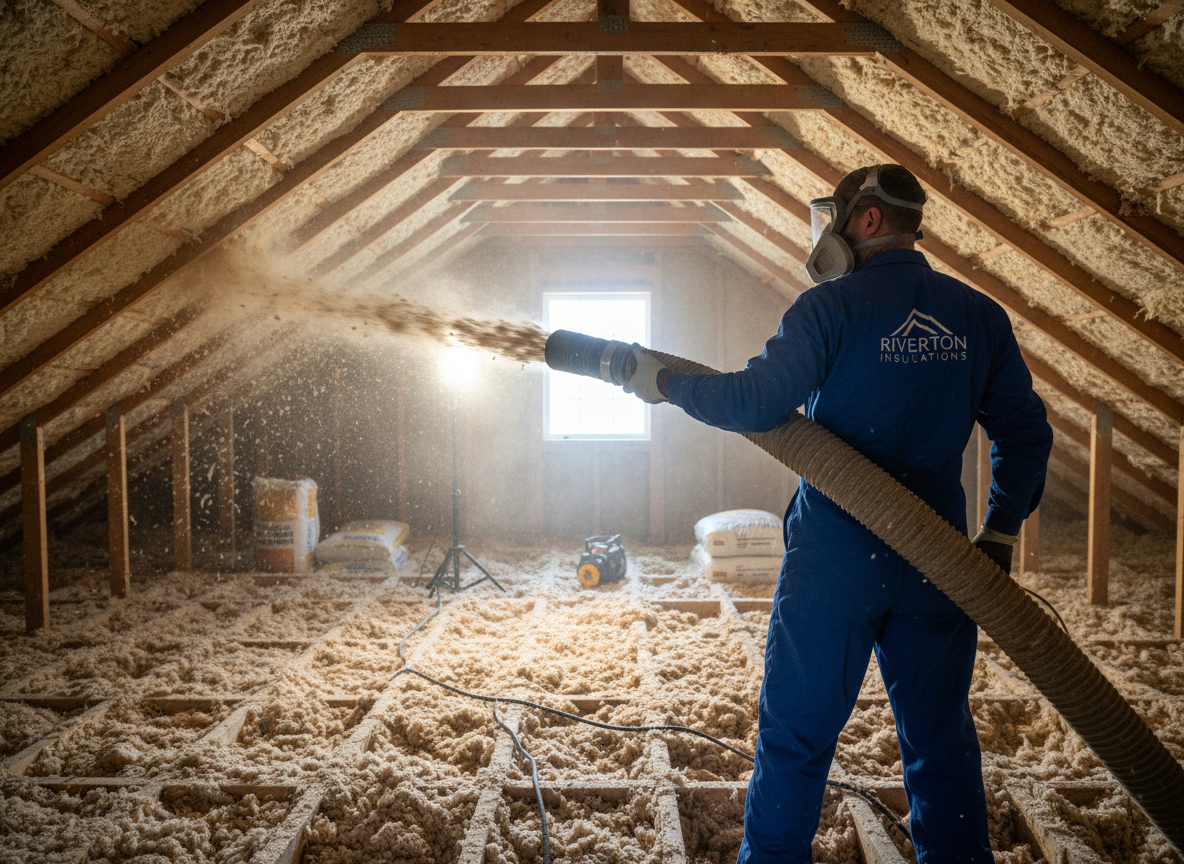
Cellulose insulation performs well in Riverton attics because the material fills irregular spaces around trusses and wiring common in homes built through the 1990s in neighborhoods such as Harvest Park. The semi-arid climate brings wide temperature swings, so proper depth prevents both summer heat gain and winter heat loss without adding excess weight to older roof structures. Installers must check for existing moisture from bathroom or kitchen vents that can reach the attic in homes near Riverton City Park.
Application starts with verifying attic ventilation meets Salt Lake County code before blowing in the material at the correct density. In homes in Western Springs, crews often work around recessed lights and must maintain required clearances to avoid fire hazards. Cellulose settles over time, so installers add extra depth on the first pass in attics exposed to prevailing winds from the west.
Edge cases include knob-and-tube wiring still present in some pre-1970 homes near Old Dome Meeting Hall; cellulose is kept clear of these circuits. The dry air also means crews watch for static that can affect blower equipment during summer installs. Proper vapor retarders are rarely needed on the attic side given the regional climate, but every job includes a final inspection for gaps along the eaves.
Seasonal Considerations
Cold winter nights in Riverton demand consistent R-value across the entire attic floor. Summer installs avoid the peak heat of the day so the cellulose does not absorb ambient moisture before it settles. Crews schedule around afternoon thunderstorms that can briefly raise humidity levels in South Jordan and Herriman homes.
Common Installation Challenges
Access through narrow pull-down stairs in Riverton Meadows homes often requires temporary removal of baffles. Existing fiberglass batts are left in place only if dry; otherwise they are removed to prevent mold when new cellulose is added. Final depth is marked on rafters so homeowners can verify coverage after the job.
Technician insight
In Riverton the thing that catches most people out with cellulose insulation is how quickly the dry winter air lets settled material drop below target depth in older attics along the western edge of Harvest Park. Homeowners often skip the second pass after the first settling cycle and end up with cold spots along the perimeter.
Western Springs Attic Fill
Home in Western Springs showed uneven temperatures during cold snaps. Inspection found thin original insulation and several open soffit vents. Cellulose was added to uniform depth after baffles were corrected. Energy use dropped noticeably the following winter.
How it works
- 1
Attic Assessment
Inspect current insulation, ventilation, wiring, and moisture sources in the specific home.
- 2
Prep and Protection
Seal bypasses, install baffles where needed, and protect electrical fixtures and access points.
- 3
Material Installation
Blow cellulose to target depth and density while maintaining required clearances around lights and vents.
- 4
Final Verification
Check coverage, depth markers, and ventilation before cleanup and homeowner walkthrough.
Pricing
Cost depends on attic size, access difficulty, and whether old insulation must be removed; upfront quotes provided after inspection.