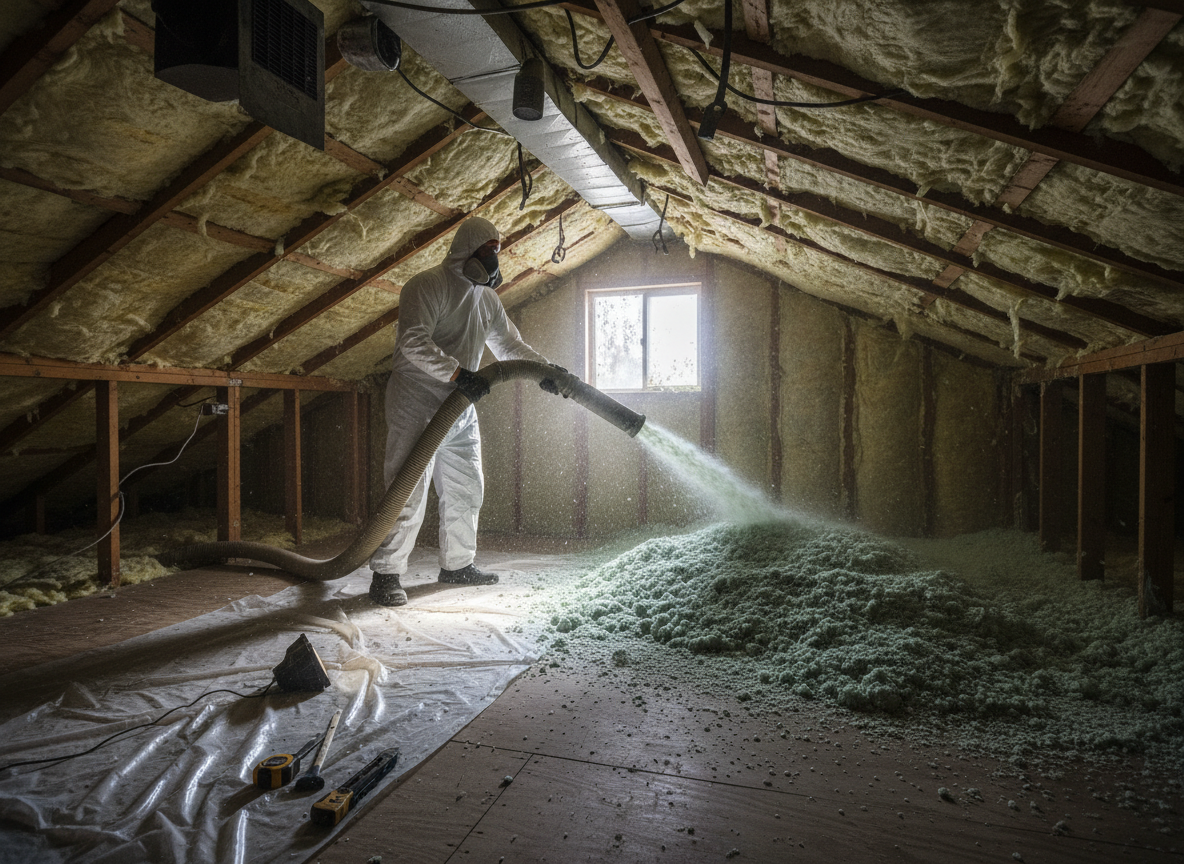
Ceiling insulation in Riverton requires attention to the temperature swings common in Salt Lake County. Hot summers push heat downward through attics while cold winters allow rapid heat loss, especially in single-story homes built in neighborhoods like Harvest Park. Proper material selection matters because semi-arid conditions create wide daily temperature swings that can cause condensation if vapor barriers are not installed correctly. Older homes in Riverton Meadows often have shallow cavities and knob-and-tube wiring that demand careful fitting to avoid fire hazards or trapped moisture.
Blowing in cellulose or fiberglass works well for most Riverton ceilings, but edge cases appear near the Old Dome Meeting Hall area where some homes have cathedral ceilings with limited access. These require rigid foam boards cut to fit rafter bays rather than loose fill. Homeowners in nearby Draper and South Jordan frequently call after noticing uneven heating bills caused by insulation settling over time. We always check for recessed lights and bathroom exhaust fans that penetrate the ceiling plane, as these create common bypasses that reduce performance in cold months.
Local terrain plays a role too. Homes on slight slopes in Western Springs can experience different airflow patterns under the roof deck compared to flatter lots in Harvest Park. We seal and insulate these areas to prevent wind-driven cold air from entering through eaves during winter storms. Proper depth is verified with a ruler at multiple points rather than relying on bag counts alone.
Technician insight
In Riverton, the thing that catches most people out with ceiling insulation is older homes in Harvest Park where the original plaster ceilings sit directly against shallow rafters. Cold winter air leaks through the eaves and travels along those cavities, making standard blown-in insulation settle unevenly within two seasons.
Western Springs Ceiling Upgrade
A single-story home in Western Springs showed high heating costs during cold snaps. We found thin fiberglass batts that had compressed and left gaps around can lights. We removed the old material, sealed the bypasses, and installed cellulose to the required depth. The homeowners reported steadier indoor temperatures the following winter.
How it works
- 1
Initial Assessment
We inspect the existing ceiling structure, note wiring and recessed fixtures, and measure current insulation depth from the attic side.
- 2
Material Selection
We choose cellulose, fiberglass, or rigid board based on cavity depth, access, and the home's exposure to Riverton's winter winds.
- 3
Preparation
We seal bypasses around lights, fans, and penetrations, then install baffles and vapor retarders where needed for the semi-arid climate.
- 4
Installation
Insulation is placed or blown to consistent depth across the ceiling plane while protecting all electrical components.
- 5
Final Check
We verify coverage, check for settling points, and confirm the attic hatch is properly insulated before leaving.
Pricing
Upfront quotes based on home size, access difficulty, and material type; no hidden fees.