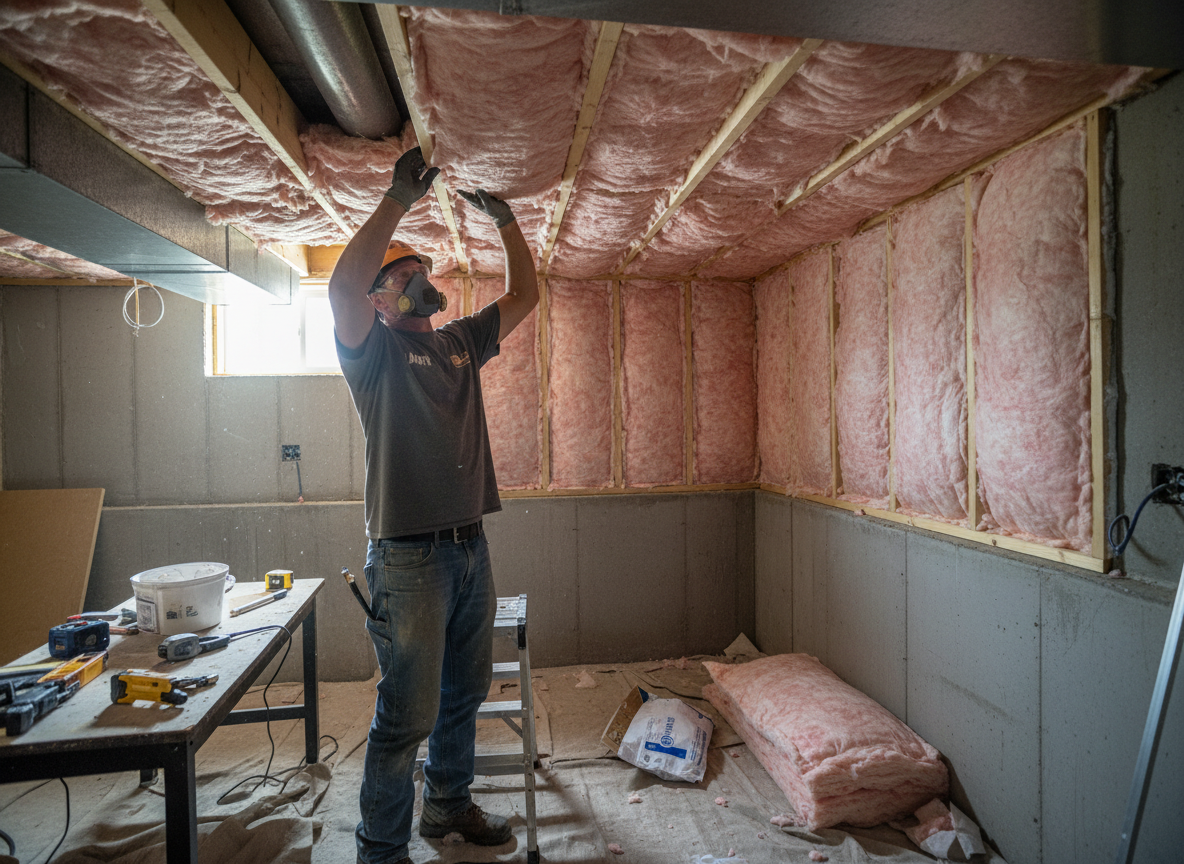
In Riverton homes, especially those in older sections of Riverton Meadows and Western Springs, basements often sit against clay-heavy soils that retain winter moisture even in the region's semi-arid climate. Proper insulation must account for both the sharp temperature swings from hot summers to freezing winters and the limited airflow typical in Salt Lake County ranch and split-level houses built before 1990. Closed-cell spray foam or rigid foam boards with taped seams are commonly chosen because they resist ground moisture while cutting heat loss through concrete walls that stay in contact with cold earth year-round.
Homeowners in Harvest Park frequently discover that unfinished basements act as the largest uncontrolled air leak in the house once winter temperatures drop. Vapor barriers and insulation must be installed continuously from the rim joist down to the slab edge, paying special attention to plumbing penetrations and old coal chute openings common in pre-1970 stock. Skipping the rim joist leaves a direct path for cold air from the crawl space transition areas that many local lots have due to slight slopes toward the Jordan River drainage.
Code requirements in Salt Lake County now call for R-19 minimum in basement walls when finishing space, yet many Riverton properties near Old Dome Meeting Hall still have exposed walls that predate those rules. Adding insulation without addressing existing efflorescence or poor grading around the foundation can trap moisture against the concrete. Experienced crews always check exterior drainage first, then install insulation that allows the wall to dry inward if needed.
Technician insight
In Riverton, the thing that catches most people out with basement insulation is the combination of cold winters and clay soils around older homes in Riverton Meadows and Harvest Park. The ground stays damp longer than expected, so if you just slap up fiberglass without fixing exterior grading first, you trap moisture against the concrete and create a bigger problem than the heat loss you started with.
Harvest Park Basement Wall Upgrade
A 1960s split-level in Harvest Park showed heavy heat loss through the north basement wall every winter. Inspection found no vapor barrier and grading that sloped toward the foundation. We corrected the grade, installed rigid foam boards with sealed seams, and insulated the rim joist. The homeowners reported noticeably steadier basement temperatures the following winter.
How it works
- 1
Site Assessment
Inspect basement walls, rim joists, and moisture levels in the specific Riverton neighborhood.
- 2
Moisture Control
Address any grading or drainage issues around the foundation before insulation begins.
- 3
Material Installation
Apply chosen insulation to walls and rim joists while sealing all gaps.
- 4
Final Inspection
Verify continuous coverage and confirm no new condensation points remain.
Pricing
Cost depends on basement size, wall height, and whether moisture prep is required; 24/7 scheduling available from our Salt Lake City base.