2026-10-24 ·
Choosing The Right Insulation Type For Riverton Attics
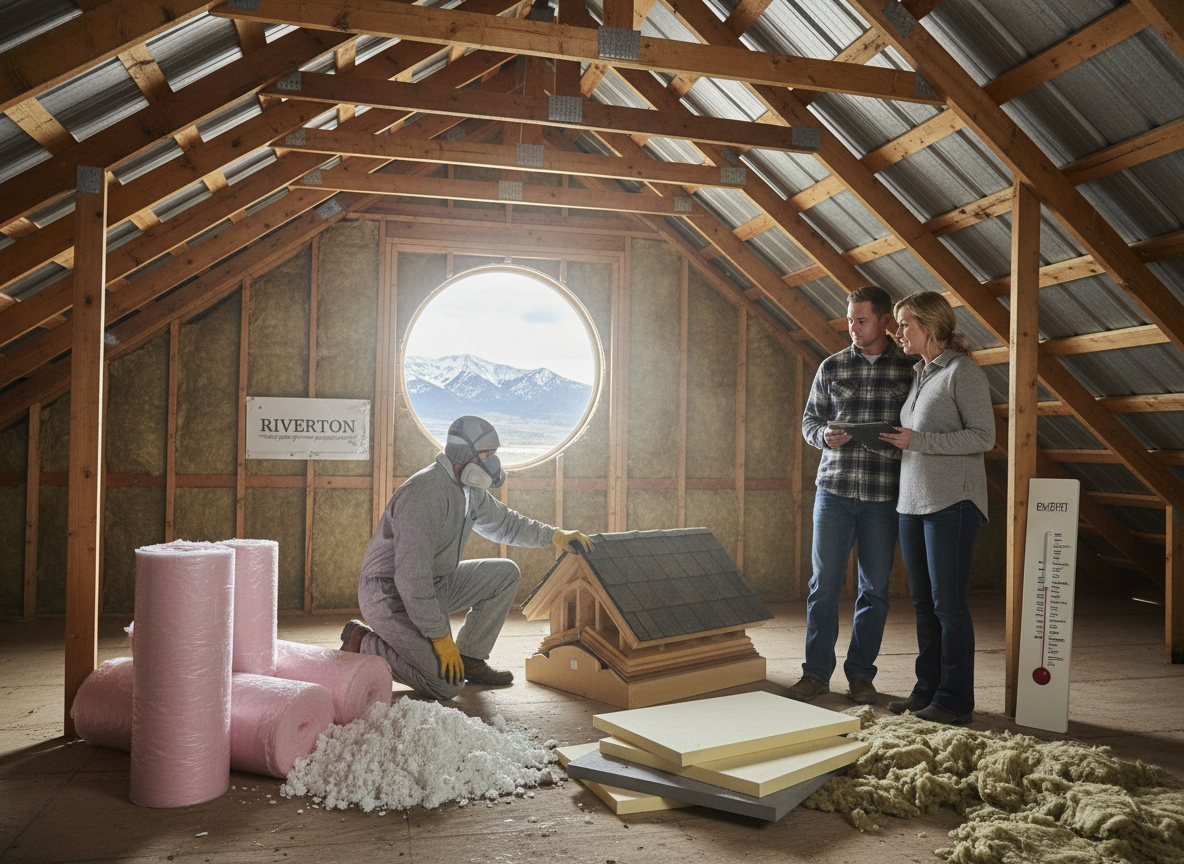
Blown-in cellulose and rockwool deliver the strongest performance for most Riverton attics because they manage wide daily temperature swings, resist settling in older roof structures common across Salt Lake County, and limit air movement during both summer heat and winter freezes.
Climate and Housing Factors in Riverton Attics
Riverton sits in a semi-arid zone where summer highs often exceed 90 degrees and winter lows drop below freezing. These swings create constant pressure on attic air sealing and insulation layers. Homes in Riverton Meadows, Western Springs, and Harvest Park frequently date from the 1970s through 1990s, with many featuring R-19 or lower original insulation and vented attics that allow dust and temperature infiltration. The cold winters drive heat upward, while hot summers reverse the load, making materials that maintain density under repeated expansion and contraction more reliable than loose-fill options that shift over time. Moisture from spring thaws can also collect on roof decking if insulation allows vapor to reach cold surfaces, so types with better inherent resistance to settling and air leakage reduce long-term condensation risk in these neighborhoods.
Comparing Blown-In Cellulose and Rockwool Performance
Blown-in cellulose fills irregular joist spaces tightly and adds some mass that slows heat transfer during peak summer afternoons. It settles modestly over years yet maintains R-value in the 3.2–3.8 range per inch when installed at proper densities. Rockwool, by contrast, holds its shape even when exposed to minor roof leaks and provides natural fire resistance valued in older Salt Lake County homes with wood framing. Both materials outperform fiberglass batts in reducing convective loops that form when attic temperatures swing 40 degrees between day and night. Homeowners in nearby Draper and South Jordan report similar results when switching from thin original insulation to these denser options. Proper depth targets 12–16 inches for R-38 to R-49 total, depending on existing material and roof pitch.
Installation Considerations for Local Attic Conditions
Attics in Harvest Park often have limited access through small scuttle holes and low clearance near eaves, requiring installers to use hoses for even coverage rather than rigid boards. Pre-existing insulation must be inspected for rodent tunnels or moisture stains before adding new material, especially in homes built before 1990. Air sealing around plumbing vents, recessed lights, and top plates prevents the new insulation from being bypassed by air movement. In Herriman and South Jordan, crews commonly add baffles at soffits to maintain ventilation while achieving target depths. These steps keep the insulation performing as rated through multiple seasons of freeze-thaw cycles typical in the county.
When to Consider Spray Foam or Fiberglass Alternatives
Spray foam becomes practical in attics with complex cathedral ceilings or when converting space above garages, though it costs more per square foot than blown-in options. Fiberglass blown-in works in newer construction with clean, unobstructed joist bays but settles faster in the older, dustier attics common in Western Springs. Review the full cost breakdown in Cost Factors For Attic Insulation In Older Riverton Homes before deciding. For condensation concerns during spring thaw periods, see Dealing With Attic Condensation Issues During Utah's Spring Thaw. Matching the material to the specific roof geometry and existing insulation condition in each Riverton neighborhood produces the longest-lasting results without unnecessary upgrades.